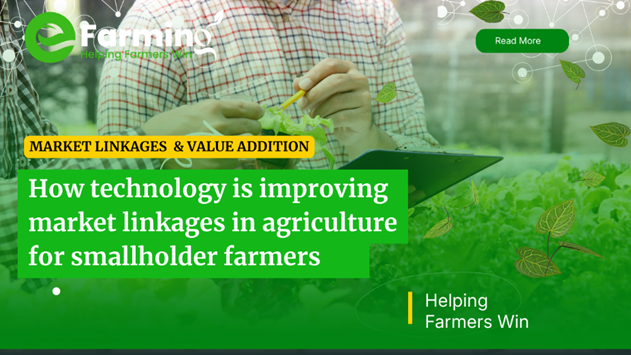
Smallholder Farmers are the backbone of the agriculture industry in Somalia, accounting for the majority of domestic food production and supporting rural livelihoods across the country. From rain fed crop farming in Bay and Bakool to irrigated agriculture along the Shabelle and Juba rivers, smallholders play a critical role in sustaining local markets and national food availability. As in much of Sub Saharan Africa, they are essential to Food security and economic stability in Somalia.
Despite their importance, smallholder farmers in Somalia continue to face persistent challenges. One of the most pressing constraints is limited access to reliable and well functioning markets. Many farmers depend on informal trading systems, face price volatility, and have limited bargaining power. Without strong Market Linkages, farmers struggle to sell their produce at fair prices, which undermines their ability to invest in quality inputs, improved technologies, and climate resilient practices. This further compounds low productivity and income insecurity.
In recent years, digital technologies have increasingly been introduced to improve farm practices, productivity, and market access in Somalia. This article explores how Digital Agriculture solutions are improving market linkages for smallholder farmers in Somalia, enabling them to connect with larger and more profitable markets while supporting inclusive growth and long term resilience in the agricultural sector.
Digital Technologies and Market Linkages
Market linkages refer to the relationships between agricultural producers and buyers that facilitate the flow of goods, services, information, and capital. In Somalia, strengthening market linkages is vital for smallholder sustainability, as it allows farmers to reach urban markets, stabilise incomes, reduce post harvest losses, and attract private sector participation. Stronger linkages also improve coordination across value chains for crops, livestock, and horticulture.
AgTech and food technology solutions play a critical role in this process by addressing information gaps, geographic fragmentation, and financial exclusion. Through mobile phones, digital platforms, and data driven tools, technology bridges the gap between rural producers and traders, processors, and consumers, enabling more transparent and efficient agricultural markets in Somalia.
Market Information and Price Transparency
Access to timely and accurate market information is essential for Somali smallholder farmers. Mobile phones and messaging platforms are increasingly used to share real time price information, buyer demand, and seasonal trends across key markets such as Mogadishu, Baidoa, Hargeisa, and Kismayo. Improved price visibility reduces information asymmetry that has traditionally favoured intermediaries.
Comparable models elsewhere in Africa, such as Esoko in Ghana, demonstrate how SMS based price information can improve farmer decision making. In Somalia, even basic digital communication tools help farmers decide when and where to sell, strengthen negotiation power, and reduce exploitative pricing practices, contributing to more balanced market relationships.
Access to New Markets Through Digital Platforms
Digital platforms are gradually expanding market access for smallholder farmers in Somalia by reducing reliance on informal middlemen. Aggregation models supported by digital coordination tools enable farmers to collectively supply wholesalers, processors, humanitarian buyers, and exporters.
Global examples such as Alibaba in China illustrate how digital marketplaces can transform rural market access by connecting producers directly with consumers and retailers. In Somalia, similar principles are applied at a smaller scale, particularly for sesame, cereals, horticulture, and livestock value chains, where digital coordination improves volume aggregation, quality consistency, and market reach
Real Time Monitoring and Supply Chain Transparency
Digital record keeping, basic traceability systems, and emerging blockchain enabled solutions are improving supply chain transparency in Somalia. These technologies allow products to be tracked from production to market, improving quality assurance and buyer confidence.
For smallholder farmers targeting export and regional markets, traceability is increasingly important. Digital monitoring helps demonstrate product origin and compliance with quality requirements, supporting access to higher value markets and reducing post harvest losses across agricultural value chains.
Digital Financial Services and Market Participation
Digital financial services are among the most impactful technologies supporting market linkages in Somalia. Mobile money platforms enable fast, secure transactions between farmers and buyers, reducing cash handling risks and transaction delays.
Regional examples such as M Pesa in Kenya and Farmcrowdy in Nigeria highlight how digital finance can link farmers to payments, credit, and guaranteed markets. Somalia’s advanced mobile money ecosystem plays a similar role by enabling seamless trade, supporting liquidity, and gradually creating digital transaction histories that can improve future access to finance.
Digital Advisory Services and Productivity
Digital advisory services are improving access to agricultural knowledge for Somali farmers. Through mobile based messaging, voice services, and emerging applications, farmers receive guidance on crop management, pest control, weather conditions, and post harvest handling.
Regional initiatives such as Ethiopia’s 80 28 hotline and applications like Plantix demonstrate how technology can deliver personalised advice at scale. In Somalia, similar digital extension approaches contribute to improved productivity and product quality, strengthening farmers’ ability to meet market requirements.
Overcoming Barriers to Digitisation
Despite growing potential, several barriers continue to limit digital adoption in Somalia. These include limited rural connectivity, low digital literacy, affordability challenges, and uneven awareness of available tools. Women and youth farmers often face additional access constraints.
Governments can support adoption by investing in rural infrastructure, enabling supportive digital policies, and fostering partnerships. Development organisations can bridge skills gaps through training and awareness programs, while the private sector can design affordable, user friendly technologies adapted to local needs. Coordinated action across stakeholders is essential.
Facilitating Market Linkages in Agriculture
Digital technologies have strong potential to transform agriculture for smallholder farmers in Somalia, but achieving this potential requires strategic partnerships, targeted interventions, and a focus on inclusivity and sustainability. Local digital initiatives such as eFarming Somalia illustrate how context specific platforms can strengthen market linkages by combining market access, digital advisory services, and farmer capacity building.
When technology is aligned with local realities and supported by collaboration between innovators, farmer networks, development actors, and the private sector, Somalia’s smallholders can transition toward more resilient, market oriented agricultural systems that support long term food security and economic growth.