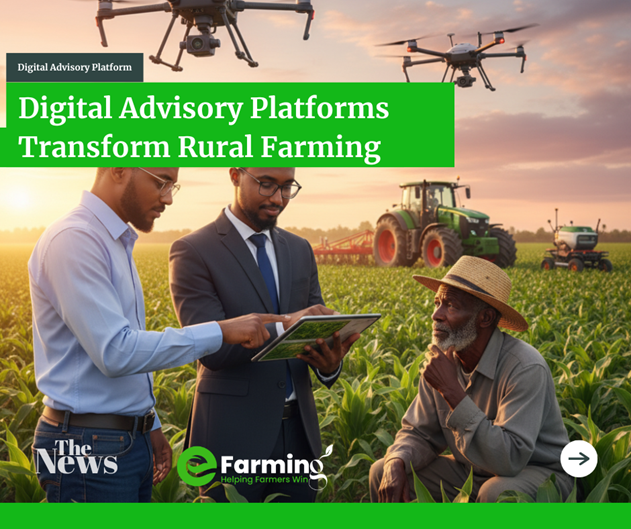
Rural farming communities across Somalia are undergoing a quiet but powerful transformation driven by digital advisory platforms. For decades, smallholder farmers have relied on traditional knowledge, informal advice, and limited extension services to make critical farming decisions. While this experience remains valuable, increasing climate variability, market pressures, and resource constraints have made traditional approaches insufficient on their own. Digital advisory platforms are now filling this gap by delivering real-time, data-driven guidance that supports smarter, more resilient farming.
Digital advisory platforms use a combination of mobile technology, data analytics, satellite imagery, and artificial intelligence to provide farmers with timely and location-specific recommendations. Through simple mobile interfaces, farmers receive guidance on crop management, pest and disease control, irrigation timing, weather risks, and post-harvest handling. Unlike generic advice, these platforms tailor recommendations to local conditions, enabling farmers to respond proactively rather than reactively.
In Somalia, where access to formal agricultural extension services is limited, digital advisory platforms are particularly impactful. Mobile phone penetration is high, even in rural areas, creating an opportunity to reach farmers at scale. Advisory messages delivered through mobile phones help farmers make informed decisions during critical stages of the farming cycle, improving yields while reducing losses caused by pests, drought, and unpredictable weather patterns.
Beyond productivity, digital advisory platforms play a key role in reducing risk. By integrating weather forecasts and early warning systems, farmers are alerted to potential climate shocks before they occur. This allows them to adjust planting schedules, protect crops, and manage water resources more efficiently. Over time, this risk-informed approach strengthens farm resilience and supports more sustainable production systems.
Digital advisory services also contribute to stronger market outcomes. Farmers who receive guidance on quality standards, harvesting practices, and post-harvest handling are better prepared to meet buyer requirements. This improves consistency, reduces spoilage, and enhances trust between farmers and markets. Advisory platforms therefore act as a bridge between production and market access, supporting more integrated agricultural value chains.
At eFarming Somalia, digital advisory platforms are central to empowering smallholder farmers. By combining localized advisory services with market access support and digital agriculture insights, eFarming Somalia ensures that technology translates into practical value on the ground. The focus is not only on delivering information, but on enabling farmers to apply knowledge effectively within their local context.
As digital advisory platforms continue to evolve, their impact on rural farming will deepen. When paired with inclusive design, farmer training, and supportive partnerships, these platforms can transform how knowledge flows through agricultural systems. For Somalia’s rural communities, digital advisory platforms represent more than a technological innovation; they are a pathway toward higher productivity, reduced risk, improved incomes, and a more resilient agricultural future.